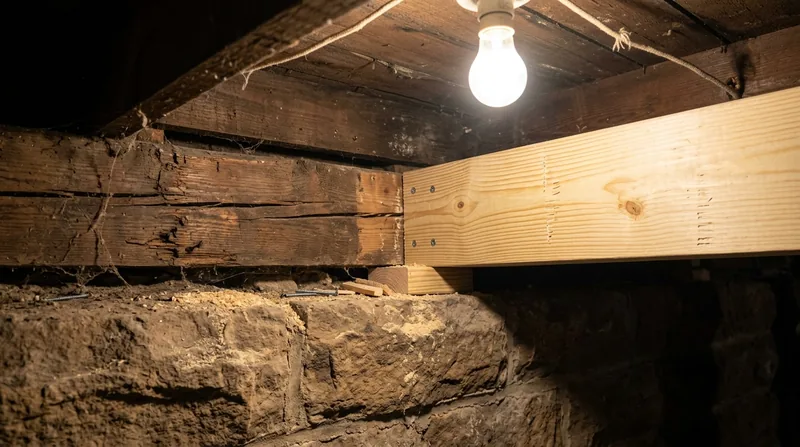




Sagging, bouncy, or soft floors in Cleveland's century-old Tudors, Colonial homes, and craftsman bungalows usually trace to damaged floor joists or subfloor. The culprit is rarely a single cause: freeze-thaw cycles that heave foundations, ice-dam moisture intrusion behind fascia and soffit, and the sheer age of wood-frame housing stock create ideal conditions for wood rot and joist failure. When your floor feels spongy underfoot or dips noticeably in a room, the structure beneath the finished surface has already begun to deteriorate. Floor joist and subfloor repair in Cleveland restores the structural integrity of your floor system by sistering or replacing compromised joists and rebuilding subfloor sections. We level floors before finishes go back down, and we explain what happened rather than simply tear out and replace. If the wood can be repaired, we repair it. When replacement is the honest answer, we say so upfront.
Why Floor Joist and Subfloor Failure Matters in Cleveland's Historic Neighborhoods
Northeast Ohio's lake-effect snowbelt winters and severe freeze-thaw cycles put relentless stress on the wood-frame homes that define Cleveland, Cleveland Heights, Shaker Heights, and Lakewood. Moisture intrusion from ice dams, failed fascia and soffit details, and foundation heave from seasonal ground movement weaken joists and rim boards year after year. Sycamore, oak, and maple wood that framed these homes a century ago will rot if it stays damp long enough. A soft or bouncy floor is not a cosmetic issue: it signals that the structure supporting your home is losing capacity. The longer you wait, the more joists fail, and the more expensive the repair becomes.
- Freeze-thaw cycles heave foundations and crack rim joists, allowing moisture to enter the band board and subfloor.
- Ice-dam water leaks behind fascia and soffit, saturating joists and sill plates in attic rim cavities and basement band boards.
- Older Cleveland doubles and bungalows often have basement moisture from grade-level crawl spaces and poor drainage, accelerating wood rot.
- Termite damage, though secondary to moisture rot in this climate, compounds joist failure when wood is already soft or compromised.
- A single failed joist can transfer load to neighbors, causing a domino effect of sagging and structural stress across the floor system.
Addressing floor joist and subfloor damage early prevents catastrophic failure and keeps repair costs manageable. The Cleveland Building Department requires a permit for structural work involving load-bearing members, and we help you navigate that process. See our page on wood rot and dry rot repair for more detail on moisture-driven decay in Cleveland homes.
Key info: A bouncy floor in a Shaker Heights Tudor or a Cleveland double usually means at least one rim joist or band board has rotted through. Water is getting in from above (ice dams, failed gutters) or below (grade moisture, poor basement drainage). Ignoring it costs you thousands more in structural damage within 2 to 3 years.
For official guidance on permits and structural work in Cleveland, consult the City of Cleveland Building Department.
How We Repair Floor Joists and Subfloor in Cleveland: Our Process
We start with a walk-through and a hands-on inspection. We probe joists with a sharp tool to map the extent of rot, check rim boards and sill plates, and look for the source of moisture. We take photos and notes so you understand what failed and why. Once we have the full picture, we propose a repair plan: sister the joists if they are still structurally sound beneath the surface, or remove and replace them if the rot has eaten through the load-bearing area. We rebuild subfloor sections with pressure-treated lumber or solid-sawn stock to match the original, level the floor, and prepare the surface for your choice of finish.
- We probe all visible joists and rim boards to identify rot depth and structural capacity.
- We locate and stop the source of moisture, whether ice dams, failed gutters, or basement seepage.
- We sister sound joists with pressure-treated lumber bolted alongside the original, doubling the load capacity.
- We remove and replace joists that are too far gone, using fasteners and joist hangers to meet current code.
- We rebuild subfloor sheathing with solid lumber or engineered panels, screw-fastened for rigidity.
- We level the floor plane before finish materials go down, using shims and compound leveling if needed.
The entire process is visible and explained as we go. You are not paying for mystery work or unnecessary replacement. See our framing and structural carpentry page for more on how we approach load-bearing repairs across Cleveland and the surrounding suburbs.
Example: A homeowner in Lakewood noticed a soft spot in the upstairs bedroom floor. We inspected and found that the rim joist had rotted from an ice-dam leak two winters prior. The band board was still intact below, but the top 6 inches of the rim had turned to soft fiber. We sistered a new pressure-treated joist alongside the original, bolted it at 16 inches on center, and rebuilt the rim sheathing. The floor is now level and solid. Total job: 3 days, no need to replace the entire band board.
Floor Joist and Subfloor Repair Methods: Which Approach is Right for Your Home
| Approach | Description | Best for |
|---|---|---|
| Sistering | Bolting a new pressure-treated joist alongside the original, doubling load capacity and preserving the existing wood. | Joists with surface rot or moisture damage but sound load-bearing wood beneath; cost-effective and proven. |
| Full Joist Replacement | Removing a compromised joist entirely and installing new pressure-treated lumber with joist hangers and modern fasteners. | Joists rotted through the load-bearing section; rim joists that have lost structural integrity; when sistering is not sufficient. |
| Subfloor Patching | Removing rotted subfloor sheathing in sections and replacing with solid-sawn or engineered lumber, screw-fastened to joists. | Localized soft spots; damage from prior water intrusion that has since dried; preserves existing joists. |
| Rim Board and Band Board Repair | Replacing the rim joist or band board, the perimeter wood that ties joists together and sits on the sill plate or foundation. | Ice-dam damage; foundation heave cracks; moisture intrusion in basement rim cavities; critical for code compliance and weather resistance. |
The right method depends on the extent of rot, the load the joist carries, and whether the damage is localized or widespread. We assess this on site and propose the approach that gives you the best value and the longest service life.
Floor Joist and Subfloor Repair Cost in Cleveland: What to Expect
Floor joist and subfloor repair in Cleveland typically starts at $1,800 for a localized patch or single-joist sister job and scales upward depending on the scope. A typical rim board or band board repair across a 20-foot span runs $2,500 to $4,500. Full joist replacement, especially in a basement or crawl space where access is tight, can reach $5,000 to $8,000 or more. The factors that move the price are joist depth and span, the number of joists affected, access difficulty (finished basements cost more than open crawl spaces), and whether moisture intrusion still needs to be stopped at the source.
Getting 2 or 3 estimates is smart. Each contractor may see the damage differently and propose a different scope. We provide a detailed written estimate that explains what we are repairing, why, and what the finished floor will look and feel like when we are done. See our full pricing overview for more detail on how we structure estimates and what drives cost on larger or complex jobs.
Travel to Cleveland, Cleveland Heights, Shaker Heights, Lakewood, Parma, Euclid, Westlake, and other nearby suburbs is included in our estimate. We do not charge per mile or add a travel fee. A free estimate is a phone call away: (216) 259-8358. We respond within 24 hours and show up on time.
Hiring a Floor Joist and Subfloor Repair Contractor Near Me: What to Look For
Finding a carpenter near Cleveland who can handle structural joist repair with care and honesty is not always easy. National handyman franchises often sell replacement when repair is the right answer. We are different: the same carpenters who bid your job do the work, and we explain pathology instead of dramatizing it. When you call, ask whether the contractor has experience with freeze-thaw damage, ice-dam moisture intrusion, and the specific house type you own. Check references from past jobs in your neighborhood. Ask to see photos of sistered joists and subfloor patches, not just completed finishes.
Verify that the contractor is fully insured and can provide a certificate of insurance. In Ohio, carpentry work does not require a state license, but structural work often requires a permit from the Cleveland Building Department or your local authority. A good contractor knows which jobs need permits and will help you get them. Ask about load-bearing wall removal or major joist replacement: these commonly require a licensed structural engineer and a permit. Do not hire a contractor who promises to skip the permit process or guarantees a claim will be approved by your insurance. We can help you document damage for a claim, but the insurer makes the final call.
If you live in a historic district or a neighborhood with an HOA, ask whether there are any restrictions on exterior work or fascia and soffit replacement that might be needed to stop future moisture intrusion. Call Cleveland Carpentry for a free, no-obligation estimate. We will answer your questions directly and show you exactly what we propose to repair and why.
Floor Joist & Subfloor Repair in Cleveland: Pricing Guide
| Service | Price | Details |
|---|---|---|
| Subfloor patch or single-joist sister | Starting at $1,800 | Localized rot in one or two joists, subfloor sheathing replacement under 50 sq ft, or sistering one joist with pressure-treated lumber |
| Rim board or band board repair | Starting at $2,500 | Replacing 10 to 20 linear feet of rim joist, typical on ice-dam damage or foundation heave in Cleveland and inner-ring suburbs |
| Multiple joists or large subfloor section | Starting at $4,500 | Three or more joists replaced, subfloor over 100 sq ft, or complex access such as finished basement or tight crawl space |
| Full basement or crawl space floor system | On estimate | Extensive rot across multiple joists and subfloor, moisture source still active, or structural assessment needed; requires on-site inspection |
| Travel | Included | No separate mileage or call-out fee within Cleveland and surrounding service areas across Cuyahoga, Lake, Lorain, and Medina counties |
| Free estimate | Free | Response within 24 hours at (216) 259-8358, includes inspection, photos, written scope, and honest repair recommendation |
Indicative pricing, the exact cost depends on square footage, finish, and site access. Free personalized estimate within 24h at (216) 259-8358.


