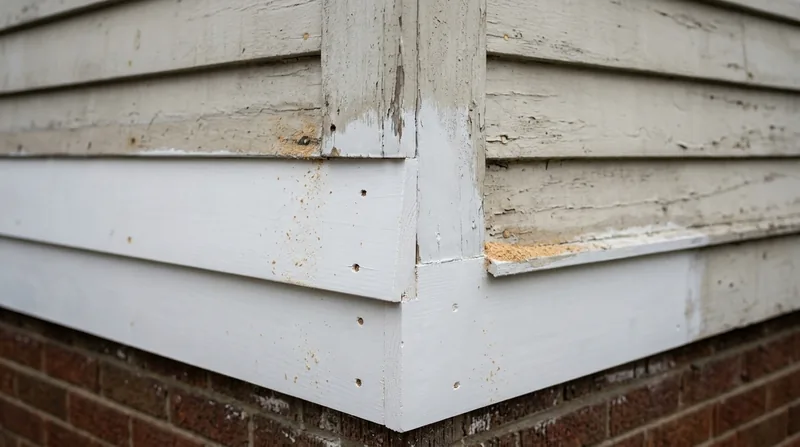




Wood rot and dry rot repair in Cleveland is a cornerstone of residential carpentry work across our region, from the 1920s Tudor Revival homes of Shaker Heights and Cleveland Heights to the century-old wood-frame doubles that line the near-west side and the restored lofts of Ohio City. The freeze-thaw cycles that define our snowbelt winters, combined with ice-dam moisture intrusion behind fascia and soffit, create ideal conditions for wood decay to establish itself in sill plates, rim joists, floor joists, and exterior trim. Unlike warmer climates where dry rot is a constant threat, Cleveland's moisture problem stems from winter snow load stress, spring thaw water penetration, and the heavy humidity of our summers. We identify the source of the moisture, cut out all decayed framing and trim, treat the surrounding wood, and rebuild with rot-resistant lumber. This is a permanent repair, not a cosmetic patch, and it stops the decay at its source.
Why Wood Rot and Dry Rot Repair Matters in Cleveland's Climate
Cleveland's lake-effect snowbelt winters and severe freeze-thaw cycles place extraordinary stress on wood-frame structures. Water finds its way behind fascia, into rim joists, and beneath sill plates, where it sits and promotes decay. A sill plate that rots compromises the entire rim joist assembly and the floor joists above it. A header or stud that shows decay in an exterior wall can eventually affect load-bearing capacity. Early detection and repair prevent far costlier structural work down the road.
- Identify decay in sill plates, rim joists, and floor joists before structural settlement occurs.
- Remove all decayed wood to the sound perimeter and treat adjacent framing to stop active decay.
- Rebuild with pressure-treated or naturally rot-resistant lumber sized to original dimensions.
- Address the moisture source, whether ice-dam intrusion, poor drainage, or failed flashing.
- Document the repair for insurance claims if the damage resulted from a covered loss.
Catching wood rot early keeps repair costs manageable and preserves the structural integrity of homes that are often irreplaceable.
Key info: Cleveland's brick Tudor and Colonial homes in the garden suburbs, along with the Craftsman bungalows and two-family doubles of the inner ring, are all vulnerable to moisture-driven decay. Our freeze-thaw cycles are relentless, and many homes built before 1950 lack the flashing and drainage details that modern code requires. Early repair is always cheaper than replacement.
For more information on related structural issues, see our page on floor joist and subfloor repair in Cleveland. If you suspect termite activity in addition to wood rot, consult our termite damage repair service and have a licensed pest inspector assess the site before we proceed with wood replacement.
How We Repair Wood Rot and Dry Rot in Cleveland Homes
Our process is straightforward and methodical. We expose the affected area, cut out all soft or spongy wood back to sound material, inspect and treat the surrounding framing, and rebuild with new lumber. We always identify and address the moisture source, whether that means improving drainage, installing proper flashing, or correcting ventilation. If the damage is extensive or affects a load-bearing member, we may recommend that a licensed structural engineer size the replacement beam or header and that you obtain a permit from the Cleveland Building and Housing Department.
- We probe and sound the wood to determine the full extent of decay, often finding more damage once we open the wall or floor.
- We remove all rotted material and a margin of sound wood around the decay to ensure we leave no spores or soft fibers behind.
- We treat exposed framing with a borate solution to protect against future decay and insect activity.
- We install new lumber, properly sized and species-appropriate, and ensure all new wood is sealed or painted to shed water.
- We correct the moisture source, whether by improving roof drainage, sealing rim joist vents, or installing ice-dam protection.
The goal is a repair that lasts as long as the original structure, not a temporary fix that fails again in five years.
Example: A Lakewood homeowner discovered soft wood along the rim joist in the basement, where ice-dam melt had been running down the exterior wall for years. We removed 18 linear feet of rotted rim joist and sill plate, treated the floor joists and band board with borate, installed new pressure-treated lumber, and sealed the rim joist vents to prevent future ice-dam water from entering the rim cavity. The repair cost $2,400 and took three days. Without it, the floor would have continued to settle and the structural damage would have spread into the floor system.
For more complex structural scenarios, including beam replacement and load-bearing wall alterations, see our page on beam replacement and load-bearing wall removal.
Wood Rot and Dry Rot Repair Methods
| Approach | Description | Best for |
|---|---|---|
| Localized Decay Removal and Rebuild | Cut out rotted section, treat exposed framing, install new lumber matched to original dimensions and species. | Rot confined to a single joist, stud, or trim board; no load-bearing compromise. |
| Sister Joist Installation | Run a new floor joist alongside a decayed or damaged joist, fastened with bolts and lag screws to share the load. | Partial decay in a floor joist that supports live load; the new joist carries load while old joist remains in place. |
| Full Rim Joist and Sill Plate Replacement | Remove and replace entire rim joist and sill plate assembly, often including treatment of floor joists and band board. | Extensive decay along the perimeter of a basement or crawl space, common in Cleveland homes with ice-dam issues. |
| Exterior Trim and Fascia Replacement | Cut out rotted soffit, fascia, or trim boards, treat underlying framing, and install new lumber with proper flashing and paint. | Rot in exterior trim and siding caused by failed paint or flashing; protects the framing underneath from further moisture. |
| Header and Structural Member Repair | For load-bearing headers, beams, or posts, typically requires sistering with a new member or full replacement under permit. | Decay in a load-bearing header or beam; usually requires engineer sizing and a building permit from the Cleveland Building Department. |
Wood Rot and Dry Rot Repair Cost in Cleveland: What to Expect
Wood rot repair costs in Cleveland start at $650 for a small, localized repair, such as a single rotted stud or a short section of trim. A full rim joist replacement on a typical Cleveland home, affecting 20 to 40 linear feet, typically ranges from $1,800 to $3,500, depending on access, the extent of decay, and whether the floor joists above also require treatment. Larger jobs, such as replacing 60 or more linear feet of rim joist and sill plate across a full basement perimeter, can reach $5,000 to $8,000 or more. Sister joist installations for partial decay run $800 to $2,000 per joist. Exterior trim and fascia repair averages $400 to $1,200 per 10 linear feet.
Several factors affect the final cost. The extent of decay is the primary driver: a small pocket of rot in one joist costs far less than decay that has spread across multiple members. Access matters, too. A rim joist in an unfinished basement is easier to reach than one behind finished drywall or in a crawl space with limited headroom. The type of wood also plays a role. Douglas fir and pressure-treated lumber are standard; redwood or other specialty lumber costs more. Whether the damage affects a load-bearing member is critical. A rotted floor joist that supports live load may require sistering or replacement under permit, which adds cost and timeline. Finally, the moisture source must be addressed. If ice-dam intrusion or poor drainage is the culprit, correcting it may require additional work to gutters, grading, or vents.
We recommend getting two or three estimates from local carpenters before making a decision. Estimates should be detailed and itemize the scope of work, the lumber to be used, and any moisture-source corrections. Avoid contractors who quote a price over the phone without visiting the site. For a detailed pricing overview of our services, visit our full pricing page.
Wood Rot and Dry Rot Repair Near Me: What Cleveland Homeowners Should Know When Hiring a Carpenter
Hiring the right carpenter for wood rot repair is essential. You want someone who understands the local climate, the building stock, and the moisture problems that are unique to Cleveland and the surrounding suburbs like Shaker Heights, Cleveland Heights, and Lakewood. Look for a carpenter who is fully insured and can show proof of general liability and workers' compensation coverage. Ask for references from recent jobs in your neighborhood or city. A good contractor will explain the repair clearly, show you the decay, discuss the moisture source, and propose a solution that addresses the root cause, not just the symptom.
Permits are required for structural work, such as replacing or sistering a load-bearing joist or header. Check with the Cleveland Building and Housing Department before work begins if the repair involves a load-bearing member. Some homeowners' associations, particularly in suburbs like Beachwood and Solon, may have restrictions on exterior work. Confirm these requirements upfront. Ask your carpenter whether the job requires an engineer opinion or a permit. A contractor who brushes off the permit question is a red flag. Finally, get a detailed written estimate that breaks down labor, materials, and timeline. Avoid any contractor who promises that insurance will cover the full cost or who offers to waive your deductible.
When you are ready to move forward, contact us for a free, no-obligation estimate. We respond within 24 hours and will visit your home to assess the damage, identify the moisture source, and propose a repair that will last.
Wood Rot & Dry Rot Repair in Cleveland: Pricing Guide
| Service | Price | Details |
|---|---|---|
| Small localized repair | Starting at $650 | Single rotted stud, trim board, or short section of fascia, no structural implications |
| Rim joist and sill plate repair | Starting at $1,800 | 20 to 40 linear feet of decay; includes removal, treatment, new lumber, and moisture-source correction |
| Full perimeter rim joist replacement | Starting at $5,000 | 60 or more linear feet across basement perimeter; extensive decay affecting floor joists and band board |
| Sister joist installation | Starting at $800 | New joist bolted alongside decayed member to share load; cost per joist, partial decay only |
| Exterior trim and fascia repair | Starting at $400 | 10 linear feet of rotted soffit or fascia; includes new lumber, flashing, and paint finish |
| Free estimate | No obligation | On-site assessment within 24 hours; call (216) 259-8358 to schedule |
Indicative pricing, the exact cost depends on square footage, finish, and site access. Free personalized estimate within 24h at (216) 259-8358.


