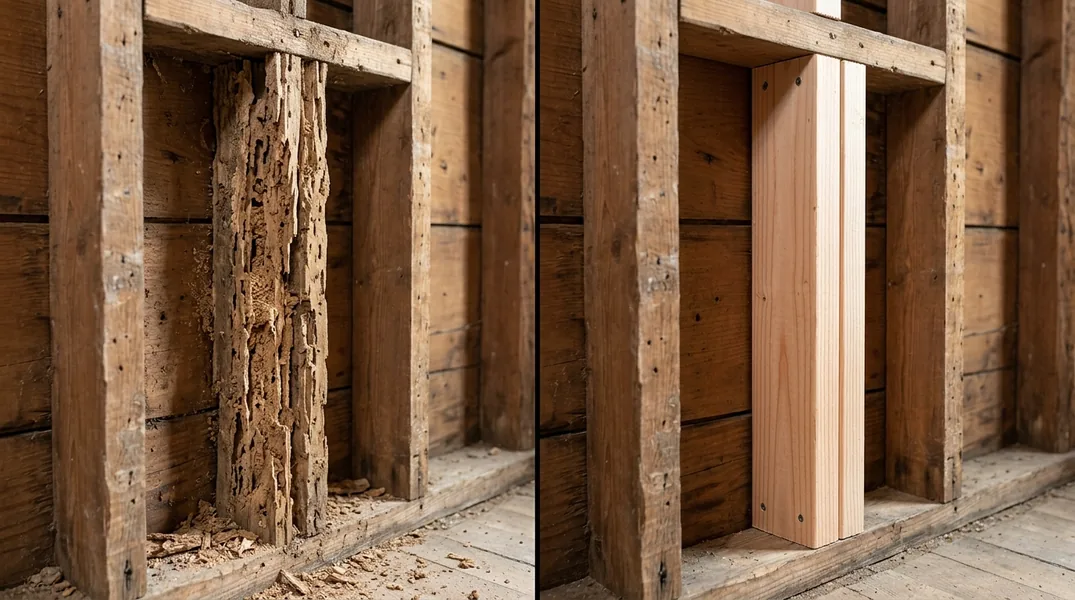
Dry Rot vs Termite Damage: Understanding the Difference
When you notice soft, deteriorating wood in your Cleveland home, your first instinct might be to panic. But before you assume the worst, it's important to understand that not all wood damage is created equal. Dry rot and termite damage are two of the most common culprits behind structural wood problems, yet they require very different approaches to repair. Mistaking one for the other could lead to ineffective treatment and wasted money.
The key difference lies in their origins. Dry rot is a fungal decay that occurs when wood loses moisture and begins to break down from the inside out. Termites, on the other hand, are living insects that actively consume wood as a food source. Understanding which problem you're facing is the first step toward protecting your home and knowing whether you need Wood Rot & Dry Rot Repair or Termite Damage Repair.
What Does Wood Rot Look Like: Visual Signs of Dry Rot
Dry rot presents itself in ways that are often easy to spot once you know what to look for. The affected wood typically becomes discolored, turning a dark brown or grayish hue. Unlike healthy wood, rotted wood becomes soft and spongy, and you can often push your fingernail or a small tool into it without much resistance. This crumbly texture is one of the most reliable indicators that fungal decay is at work.
One of the distinctive features of dry rot is the pattern of cracks that often appears on the wood's surface. These cracks typically form in a cube-like or cross-hatch pattern, running both along and across the grain. You might also notice a musty, earthy smell in the affected area, which is the odor of the fungus breaking down the wood. In advanced stages, dry rot can produce a thin, paper-like membrane or fruiting body that looks like a pancake-shaped fungus on the wood surface. If you're seeing these signs in your Cleveland Heights or Cleveland home, it's time to call a professional for assessment.
Signs of Termite Damage in Wood: What to Watch For
Termite damage presents a distinctly different appearance from dry rot, though the two can sometimes coexist in the same structure. When termites infest wood, they typically tunnel through it in search of cellulose, leaving behind galleries or hollow pathways. This means the wood may appear relatively normal on the surface, but inside it's been hollowed out like a honeycomb. This is why termite damage can be particularly deceptive and dangerous to a home's structural integrity.
The most obvious sign of active termite damage is the presence of mud tubes, which termites construct to travel between their colony and food sources while maintaining moisture. These tubes are typically about the thickness of a pencil and run along the exterior foundation or interior walls. You might also notice discarded termite wings near windowsills or light sources, since winged termites shed their wings after finding a mate. Wood damaged by termites often appears darker and more hollowed out than wood affected by dry rot, and you may see small exit holes where termites have burrowed through. Unlike the musty smell of dry rot, termite damage often has little odor, which is one reason why infestations can go undetected for years.
Key Differences: Dry Rot vs Termite Damage at a Glance
To help you quickly assess which problem you might be facing, here are the primary differences between dry rot and termite damage. Dry rot is caused by fungi and occurs in wood with high moisture content and poor ventilation, while termites are insects that actively feed on wood regardless of moisture levels. The damage patterns differ too: dry rot creates cube-like cracks and crumbly, discolored wood, whereas termite damage produces hollow galleries and mud tubes.
Another important distinction is the speed of damage. Dry rot progresses relatively slowly over months or years, while termite colonies can cause significant structural damage in just a few years. Dry rot typically affects wood in areas with moisture problems, such as basements, crawl spaces, and around plumbing leaks. Termites, however, can infest wood anywhere in your home, from the foundation to the attic. The smell is also telling: dry rot produces a musty odor, while termite damage usually has no distinctive smell. Understanding these differences helps you communicate more effectively with a professional when you need Floor Joist & Subfloor Repair or other structural restoration work.
When to Call a Professional: Wood Rot & Dry Rot Repair Near Me
While minor surface discoloration might seem like something you can handle yourself, both dry rot and termite damage require professional assessment and treatment. The problem is that what you see on the surface is often just the tip of the iceberg. Damage that extends deep into structural elements like floor joists, beams, and wall framing can compromise your home's safety and stability. This is why attempting DIY repairs on anything beyond cosmetic issues is risky.
A professional carpenter from Cleveland Carpentry can properly diagnose whether you're dealing with dry rot, termites, or both. We'll conduct a thorough inspection to determine the extent of the damage and recommend the most effective treatment plan. For dry rot, this might involve removing affected wood, addressing the moisture source, and replacing compromised structural elements. For termite damage, you may need to coordinate with a pest control specialist while we handle the structural repairs. If you suspect wood damage in your home, don't wait. Contact Cleveland Carpentry at (216) 259-8358 or request a free estimate to get started.
Prevention and Early Detection: Protecting Your Cleveland Home
The best defense against both dry rot and termite damage is prevention and early detection. For dry rot, focus on moisture control. Ensure your gutters are clean and functioning properly, fix any plumbing leaks promptly, and maintain good ventilation in crawl spaces and basements. Check your foundation regularly for signs of water intrusion, and consider installing a sump pump or dehumidifier if you have persistent moisture issues. Regular inspections of wood structures, especially in older homes, can catch early signs of fungal decay before it becomes a major problem.
To prevent termite infestations, keep wood mulch and debris away from your home's foundation, and maintain at least a 6-inch gap between soil and any exposed wood. Have your home inspected annually by a professional, particularly if you live in an area prone to termites. Reduce moisture around your foundation, as termites are attracted to damp conditions. If you do discover damage early, whether it's the beginning stages of dry rot or evidence of termites, professional intervention can save you thousands in repair costs. Cleveland Carpentry is here to help with comprehensive inspections and repairs. Reach out today at (216) 259-8358 to schedule your assessment.
Looking for a professional carpentry contractor in Cleveland? Cleveland Carpentry responds fast for all your carpentry needs.
Get a Free QuoteOur services: Wood Rot & Dry Rot Repair · Termite Damage Repair · Floor Joist & Subfloor Repair