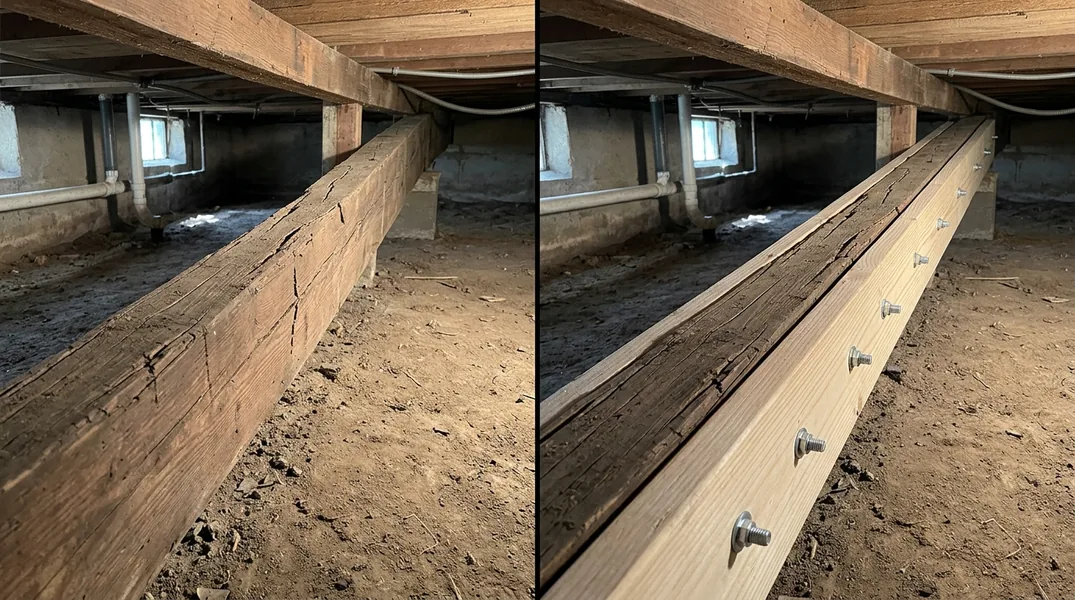
Why Is My Floor Sagging? Common Causes in Older Cleveland Homes
If you own an older home in Cleveland, you may have noticed your floors aren't quite level anymore. That subtle slope or bounce underfoot is more than just a cosmetic issue, it's a sign that something is wrong beneath the surface. Sagging floors typically develop over years or even decades, and understanding what causes them is the first step toward fixing the problem.
The most common culprit behind sagging floors is damage to the structural support system underneath your home. Floor joists, the horizontal beams that hold up your flooring, can weaken or fail for several reasons. Wood Rot & Dry Rot Repair is one of the leading causes, especially in older homes where moisture has infiltrated crawl spaces or basements over decades. As wood rots, it loses its structural integrity and can no longer support the weight above it. Similarly, Termite Damage Repair may be necessary if your home has been infested, as termites hollow out wood from the inside, weakening joists catastrophically.
Beyond pest and rot damage, settling foundations and inadequate support posts can cause sagging. Older Cleveland homes sometimes lack sufficient support columns in basements or crawl spaces, or the existing ones may have shifted over time. Water damage, poor ventilation in crawl spaces, and the simple passage of time can all contribute to floor failure. If you've noticed this issue, it's important to have a professional inspection to identify the exact cause before attempting any repairs.
How to Diagnose Floor Joist Damage: What Homeowners Should Know
Before you can fix a sagging floor, you need to understand what's actually happening beneath it. A visual inspection of your basement or crawl space is the first diagnostic step. Look for visible signs of damage: discolored wood, soft spots that feel spongy when you press on them, or wood that crumbles easily. These are telltale signs of rot. You may also notice a musty smell, which indicates moisture problems and fungal growth.
Floor joists that are damaged often show physical deformation. They may be cracked, bent, or warped. In some cases, you'll see visible sagging in the joist itself, where the beam has curved downward under the weight it's supporting. If the damage is severe enough, you might notice that the floor above feels bouncy or unstable when you walk on it. These are all red flags that Floor Joist & Subfloor Repair is needed soon.
However, some damage isn't visible to the untrained eye. Moisture can be trapped inside wood, causing rot that develops slowly without obvious external signs. This is why a professional inspection is so valuable. Experienced carpenters have tools and knowledge to identify damage in its early stages, before it becomes catastrophic. If you suspect floor problems, calling for a free estimate from Cleveland Carpentry can give you peace of mind and a clear action plan.
Sagging Floor Repair Solutions: From Sistering Floor Joists to Full Replacement
Once you've identified the problem, the next step is choosing the right repair method. The solution depends on the extent of the damage, the number of joists affected, and your budget. For minor damage, sistering floor joists is often the most cost-effective option. Sistering involves installing a new, healthy joist alongside the damaged one, essentially doubling the support in that area. The two joists are bolted together securely, and the new joist carries the load that the weakened one can no longer handle safely.
Sistering is an excellent choice when the damage is localized to one or two joists and the rest of the structural system is sound. It's less invasive than full joist replacement and requires less time and labor. However, if the damage is widespread across multiple joists, or if the joists are severely compromised, a full replacement may be necessary. This involves removing the damaged wood entirely and installing new joists to code.
In some cases, the problem isn't just the joists themselves but the support system that holds them up. If your home's support posts or beams have failed, you may need Beam Replacement & Load-Bearing Wall Removal to restore structural integrity. This is more complex work that requires careful planning and often temporary support structures during installation. The good news is that once the underlying cause is addressed, whether it's rot, termites, or inadequate support, your floors can be restored to their original level and stability.
Sagging Floor Repair Cost in Cleveland: What to Budget
The pricing for sagging floor repairs varies widely depending on what's causing the problem and how extensive the damage is. A simple sistering project on one or two joists might run between 1,500 and 3,500 dollars, while more extensive repairs can easily exceed 10,000 dollars. If you need full joist replacement, beam work, or foundation repairs, costs can climb significantly higher. The best way to understand what your specific situation will cost is to have a professional assessment.
Several factors influence the final cost. The number of damaged joists, the accessibility of the work area, whether you need temporary support structures, and the cost of materials all play a role. If the damage is caused by moisture, you may also need to address the underlying water issue to prevent future problems, which adds to the overall project cost. Additionally, if your home requires permits for structural work, permit fees and inspections will be part of your budget.
While sagging floor repairs aren't cheap, they're a necessary investment in your home's safety and value. Ignoring the problem only makes it worse, and a severely damaged floor can become dangerous. More importantly, unaddressed structural damage can affect your home's resale value and may even make it difficult or impossible to sell. Getting ahead of the problem with a professional inspection and timely repairs is the smartest financial decision. Contact Cleveland Carpentry at (216) 259-8358 to discuss your specific situation and get an accurate estimate for your repairs.
Floor Joist & Subfloor Repair Near Me: When to Call a Professional
If you're a homeowner in Cleveland with sagging floors, you might be tempted to tackle the repair yourself. However, this is one area where professional expertise is truly essential. Floor joists are part of your home's load-bearing structure, meaning they support the entire weight of your house and everything in it. A mistake during repair can compromise your home's safety and create liability issues.
Professional carpenters have the training, tools, and experience to diagnose problems accurately and implement solutions that meet building codes. They understand how to properly install sistering joists, replace damaged beams, and ensure that temporary support is in place during work to prevent collapse. They also know how to address the underlying causes of damage, not just the symptoms. A professional can identify moisture issues, recommend solutions to prevent future rot, and ensure your repair will last for decades.
When you're ready to address your sagging floors, Cleveland Carpentry is here to help. We've worked on countless older homes throughout the region and understand the unique challenges that Cleveland properties face. We'll provide a thorough inspection, explain exactly what needs to be done, and give you honest pricing before we start any work. Call us at (216) 259-8358 or reach out online to schedule your free estimate today.
Preventing Future Floor Problems: Maintenance and Moisture Control
Once your floors have been repaired, the best investment you can make is preventing future damage. The most common cause of floor joist failure is moisture, so controlling humidity and water in your basement or crawl space is critical. Ensure that gutters and downspouts direct water away from your foundation. Fix any leaks promptly, and consider installing a sump pump if your basement is prone to water intrusion.
Proper ventilation in crawl spaces is also essential. Moisture-laden air needs to escape, or it will condense on wood and create an environment where rot and mold thrive. Some older homes benefit from the installation of a vapor barrier on the ground in crawl spaces, along with additional ventilation. If you've had water damage or mold issues in the past, having a professional assess your crawl space or basement ventilation is worthwhile.
Regular inspections are your best defense against future problems. Every few years, take time to look at the condition of your joists and support posts. Catch small problems early, before they become expensive repairs. If you notice new signs of damage, soft wood, or water staining, don't wait. The sooner you address issues, the less damage will occur and the less expensive the repair will be. Cleveland Carpentry is always available to help with inspections, maintenance advice, or urgent repairs whenever you need us.
Looking for a professional carpentry contractor in Cleveland? Cleveland Carpentry responds fast for all your carpentry needs.
Get a Free QuoteOur services: Wood Rot & Dry Rot Repair · Termite Damage Repair · Floor Joist & Subfloor Repair