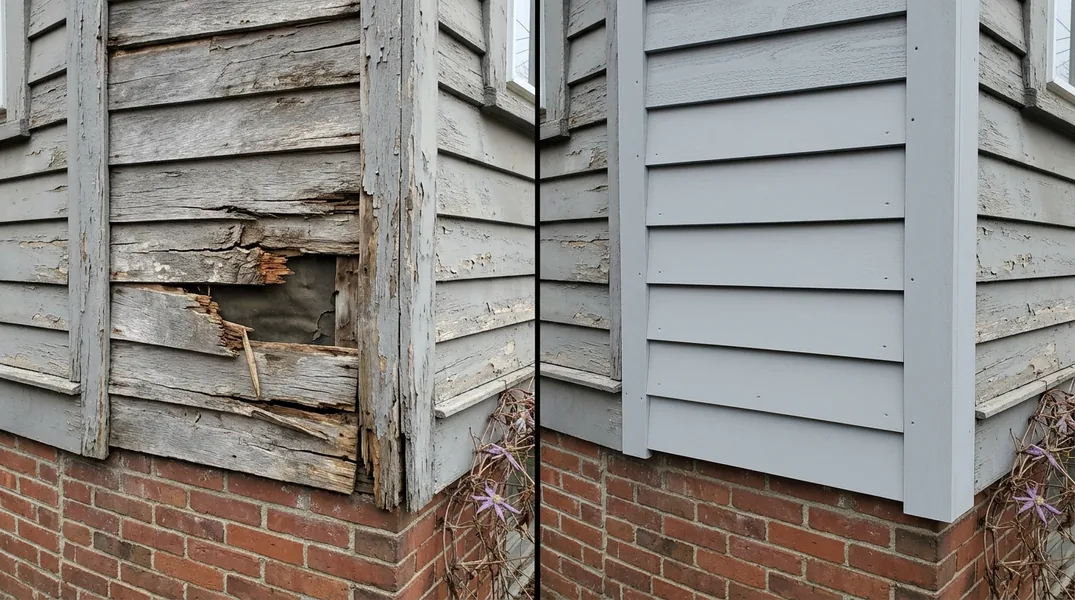
How Cleveland's Winter Weather Creates the Perfect Storm for Wood Rot
If you own a home in Cleveland, you already know that winter is unforgiving. But what many homeowners don't realize is that our region's freeze-thaw cycle is one of the most destructive forces working against the structural integrity of their homes. Unlike areas with consistently cold winters or mild climates, Cleveland experiences dramatic temperature swings that create ideal conditions for wood rot to flourish.
When temperatures fluctuate above and below freezing, water penetrates wood and then expands as it freezes. This expansion creates microscopic cracks and fissures in the wood fibers. When the ice thaws, water drains deeper into the wood, and the cycle repeats. Over weeks and months, this repeated expansion and contraction weakens the structural integrity of exterior wood elements like fascia boards, siding, deck posts, and window frames. The damage compounds year after year, and by the time many homeowners notice a problem, significant decay has already taken hold.
Wood rot thrives in damp conditions, and our climate provides exactly that. The moisture that results from snow melt, freeze-thaw cycles, and seasonal rainfall creates an environment where fungal spores can germinate and spread. Combine this with poor drainage, clogged gutters, or inadequate roof overhangs, and you have a recipe for accelerated wood deterioration that demands professional attention.
Common Signs of Wood Rot You Should Never Ignore
The earlier you catch wood rot, the easier and more affordable it is to repair. Unfortunately, many homeowners don't know what to look for, so damage often goes unnoticed until it becomes severe. Learning to recognize the signs of wood rot can save you thousands of dollars in structural repairs down the road.
One of the most obvious indicators is soft or spongy wood. If you press your finger or a screwdriver into exterior wood and it sinks in easily, that's a red flag. Healthy wood should feel firm and resist pressure. You might also notice discoloration, paint peeling or bubbling, or wood that appears darker than surrounding areas. Some wood rot appears as a powdery residue or sawdust-like material on or near the affected wood. Visible gaps between boards, warping, or wood that appears to be pulling away from its fasteners are also common warning signs.
Don't overlook less obvious indicators either. If you notice a musty smell near your foundation, crawl space, or exterior walls, that could indicate hidden moisture and fungal growth. Similarly, if your floors feel bouncy or uneven in certain areas, or if doors and windows no longer close properly, wood rot in floor joists or structural framing might be the culprit. These symptoms deserve immediate inspection by a professional who can assess the full extent of the damage and recommend the right repair strategy.
Exterior Wood Rot Repair Near Me: When to Call a Professional
While small surface-level wood rot might seem like a DIY project, most homeowners underestimate the scope of damage lurking beneath the surface. Exterior wood rot repair requires specialized knowledge, proper tools, and an understanding of building codes to ensure the repair is done correctly and safely. Attempting to patch rot without addressing the underlying moisture problem will only result in the rot returning within a few years.
Professional contractors can identify whether you're dealing with dry rot or wet rot, determine how deep the damage extends, and assess whether structural elements are compromised. They can also pinpoint and fix the moisture source, whether that's a leaky gutter, poor grading, missing caulk, or inadequate ventilation. This comprehensive approach ensures that your repair lasts and prevents future problems in the same area.
If you're experiencing any of the warning signs mentioned above, or if you simply want a professional inspection to catch problems early, contact Cleveland Carpentry at (216) 259-8358 or request a free estimate. Our team serves homeowners throughout the Cleveland area and can provide an honest assessment of your home's condition.
Dry Rot vs. Wet Rot: Understanding the Difference
Dry rot repair and wet rot repair are not the same process, and misdiagnosing which type of rot you have can lead to ineffective repairs. Understanding the difference helps you appreciate why professional assessment is so important, especially in a climate like Cleveland's.
Wet rot occurs in wood that has a high moisture content, typically above 20 percent. It's the most common type of rot in our region because of the freeze-thaw cycle and seasonal moisture. Wet rot develops more slowly than dry rot but can still cause significant structural damage if left untreated. The wood becomes soft and spongy, and the decay is usually localized to areas with the highest moisture exposure. The good news is that wet rot can often be stopped by eliminating the moisture source and replacing the affected wood.
Dry rot is more aggressive and can spread rapidly through a building, even to areas that don't appear obviously damp. It's caused by a fungus that breaks down the cellulose in wood, causing it to become brittle and crumbly. Dry rot can travel through masonry and other materials, making it particularly dangerous if it goes undetected. Because dry rot spreads so quickly and can affect large areas, it typically requires more extensive repairs and professional treatment. A qualified contractor will know how to contain and eliminate dry rot effectively.
Wood Rot & Dry Rot Repair Cost in Cleveland: What to Budget
The cost of wood rot repair varies widely depending on the extent of the damage, the location of the rot, and the type of repair needed. Small, localized repairs might cost a few hundred dollars, while extensive structural damage could run into thousands. Understanding what factors influence pricing can help you budget appropriately and recognize when a quote seems unreasonably low.
Several variables affect the final cost. The size of the affected area is the most obvious factor. A small section of rotted fascia board will cost far less than replacing an entire wall or multiple floor joists. The accessibility of the damaged wood also matters. If rot is in an easy-to-reach location, the repair is faster and less expensive. Rot hidden behind siding, in crawl spaces, or in structural framing takes longer to address and costs more. Additionally, if the repair requires addressing underlying moisture problems like improving drainage or replacing gutters, those costs factor in.
Rather than guessing or comparing quotes without full information, the best approach is to get a detailed assessment from a qualified contractor. Cleveland Carpentry provides transparent pricing and will walk you through what's involved in your specific repair. Call (216) 259-8358 or request a free estimate to get an accurate picture of what your repair will cost.
Prevention: Protecting Your Home from Freeze-Thaw Damage
The best strategy for dealing with wood rot is preventing it in the first place. While you can't control Cleveland's winter weather, you can control how well your home is protected against moisture intrusion and the damage it causes.
Start with your roof and gutters. Make sure gutters are clean and functioning properly, directing water away from your foundation and exterior walls. Check that your roof has adequate overhang to keep rain and snow melt from running down your siding. Inspect caulking around windows and doors annually and recaulk as needed. Ensure that your foundation has proper grading so water slopes away from your home rather than pooling near the base. If you have a crawl space, make sure it's properly ventilated and consider installing a vapor barrier to reduce moisture.
For exterior wood elements like decks, fences, and trim, consider using pressure-treated lumber or naturally rot-resistant species when replacement is needed. Apply a quality exterior wood stain or sealant every few years to protect against moisture penetration. Keep an eye on any areas where different materials meet, as these transitions are common entry points for water. Finally, schedule an annual inspection of your home's exterior, ideally in early spring after winter weather has done its worst. Catching small problems early prevents them from becoming expensive repairs later.
Looking for a professional carpentry contractor in Cleveland? Cleveland Carpentry responds fast for all your carpentry needs.
Get a Free QuoteOur services: Wood Rot & Dry Rot Repair · Termite Damage Repair · Floor Joist & Subfloor Repair